- Introduction
-
Getting Started
- Creating an Account in Hevo
- Subscribing to Hevo via AWS Marketplace
- Subscribing to Hevo via Snowflake Marketplace
- Connection Options
- Familiarizing with the UI
- Creating your First Pipeline
- Data Loss Prevention and Recovery
- Upgrading Pipeline from Standard to Edge
-
Data Ingestion
- Types of Data Synchronization
- Ingestion Modes and Query Modes for Database Sources
- Ingestion and Loading Frequency
- Data Ingestion Statuses
- Deferred Data Ingestion
- Handling of Primary Keys
- Handling of Updates
- Handling of Deletes
- Hevo-generated Metadata
- Best Practices to Avoid Reaching Source API Rate Limits
-
Edge
- Data Ingestion
- Core Concepts
-
Pipelines
- Familiarizing with the Pipelines UI
- Creating an Edge Pipeline
- Working with Edge Pipelines
- Pipeline Overview
- Pipeline Job History
- Needs Attention
- Object and Schema Management
- Activity Log
-
Sources
- Connect AI
- PostgreSQL
- Oracle
- MySQL
- SQL Server
- Troubleshooting Database Sources
- CockroachDB
- MongoDB
- SharePoint
- Salesforce Bulk API V2
- Ordergroove
- BambooHR
- Stripe
- NetSuite SuiteAnalytics
- Shopify
- Slack
- ClickUp
- Monday.com
- Pipedrive
- Workable
- Fathom
- HubSpot
- Salesforce Marketing Cloud
- Google Analytics 4
- Google Ads
- Facebook Ads
- Microsoft Ads
- LinkedIn Ads
- Xero
- Instagram Business
- Amazon Selling Partner
- TikTok Ads
- StackAdapt
- Amazon Ads
- Pinterest Organic
- Zendesk Support
- Snapchat Ads
- TikTok Organic
- Google Search Console
- Klaviyo v2
- Braintree Payments
- Facebook Pages
- Tempo
- PayPal
- Auth0
- Pinterest Ads
- Apple Search Ads
- Permit.io
- Amplitude Analytics
- Customer.io
- Paddle
- Jira Cloud
- Fullstory
- GitHub
- WorkOS
- ActiveCampaign
- Campaign Monitor
- Infobip
- Mailgun Send
- Metaplane
- Notion
- Recharge
- sevdesk
- Statuspage
- Teamwork.com
- Workday RaaS
- Yotpo
- TikTok Shop Partner Center
- Linear
- Microsoft Dynamics 365 Business Central
- Checkout.com
- Pylon
- Increase
- Microsoft Teams
- Rollbar
- Toggl Track
- QuickBooks Online
- Zoho Desk
- Livestorm
- Attentive
- SendGrid
- Recurly
- Bitly
- Shortcut
- Buzzsprout
- Persona
- Mailjet
- Open Exchange Rates
- PagerDuty
- CircleCI
- SonarQube
- Chargebee
- Freshdesk
- Bing Webmaster Tools
- Rundeck
- Datadog
- Cal.com
- Mixpanel
- Matomo
- Walmart Marketplace
- Xray
- Reddit Ads
- Postmark
- Zoho Recruit
- HiBob
- Freshchat
- Zoho Books
- Marketo
- LaunchDarkly
- Outreach
- Airtable
- Attio
- Okta
- Zendesk Chat
- Bigin by Zoho CRM
- Brevo
- Harvest
- dbt Cloud
- Nium
- Zoho Campaigns
- Qualaroo
- SCORM Cloud
- Typeform
- Lob
- Deputy
- Naming Conventions for Source Data Entities
- Destinations
- Transformations
- Alerts
- Activate
- Custom Connectors
-
Data Loading
- Loading Data in a Database Destination
- Loading Data to a Data Warehouse
- Optimizing Data Loading for a Destination Warehouse
- Deduplicating Data in a Data Warehouse Destination
- Manually Triggering the Loading of Events
- Scheduling Data Load for a Destination
- Loading Events in Batches
- Data Loading Statuses
- Data Spike Alerts
- Name Sanitization
- Table and Column Name Compression
- Parsing Nested JSON Fields in Events
-
Pipelines
- Data Flow in a Pipeline
- Familiarizing with the Pipelines UI
- Working with Pipelines
- Managing Objects in Pipelines
- Pipeline Jobs
-
Transformations
-
Python Code-Based Transformations
- Supported Python Modules and Functions
-
Transformation Methods in the Event Class
- Create an Event
- Retrieve the Event Name
- Rename an Event
- Retrieve the Properties of an Event
- Modify the Properties for an Event
- Fetch the Primary Keys of an Event
- Modify the Primary Keys of an Event
- Fetch the Data Type of a Field
- Check if the Field is a String
- Check if the Field is a Number
- Check if the Field is Boolean
- Check if the Field is a Date
- Check if the Field is a Time Value
- Check if the Field is a Timestamp
-
TimeUtils
- Convert Date String to Required Format
- Convert Date to Required Format
- Convert Datetime String to Required Format
- Convert Epoch Time to a Date
- Convert Epoch Time to a Datetime
- Convert Epoch to Required Format
- Convert Epoch to a Time
- Get Time Difference
- Parse Date String to Date
- Parse Date String to Datetime Format
- Parse Date String to Time
- Utils
- Examples of Python Code-based Transformations
-
Drag and Drop Transformations
- Special Keywords
-
Transformation Blocks and Properties
- Add a Field
- Change Datetime Field Values
- Change Field Values
- Drop Events
- Drop Fields
- Find & Replace
- Flatten JSON
- Format Date to String
- Format Number to String
- Hash Fields
- If-Else
- Mask Fields
- Modify Text Casing
- Parse Date from String
- Parse JSON from String
- Parse Number from String
- Rename Events
- Rename Fields
- Round-off Decimal Fields
- Split Fields
- Examples of Drag and Drop Transformations
- Effect of Transformations on the Destination Table Structure
- Transformation Reference
- Transformation FAQs
-
Python Code-Based Transformations
-
Schema Mapper
- Using Schema Mapper
- Mapping Statuses
- Auto Mapping Event Types
- Manually Mapping Event Types
- Modifying Schema Mapping for Event Types
- Schema Mapper Actions
- Fixing Unmapped Fields
- Resolving Incompatible Schema Mappings
- Resizing String Columns in the Destination
- Changing the Data Type of a Destination Table Column
- Schema Mapper Compatibility Table
- Limits on the Number of Destination Columns
- File Log
- Troubleshooting Failed Events in a Pipeline
- Mismatch in Events Count in Source and Destination
- Audit Tables
- Activity Log
-
Pipeline FAQs
- Can multiple Sources connect to one Destination?
- What happens if I re-create a deleted Pipeline?
- Why is there a delay in my Pipeline?
- Can I change the Destination post-Pipeline creation?
- Why is my billable Events high with Delta Timestamp mode?
- Can I drop multiple Destination tables in a Pipeline at once?
- How does Run Now affect scheduled ingestion frequency?
- Will pausing some objects increase the ingestion speed?
- Can I see the historical load progress?
- Why is my Historical Load Progress still at 0%?
- Why is historical data not getting ingested?
- How do I set a field as a primary key?
- How do I ensure that records are loaded only once?
- Why can't I see my Pipelines after logging in?
- Events Usage
-
Sources
- Free Sources
-
Databases and File Systems
- Data Warehouses
-
Databases
- Connecting to a Local Database
- Amazon DocumentDB
- Amazon DynamoDB
- Elasticsearch
-
MongoDB
- Generic MongoDB
- MongoDB Atlas
- Support for Multiple Data Types for the _id Field
- Example - Merge Collections Feature
-
Troubleshooting MongoDB
-
Errors During Pipeline Creation
- Error 1001 - Incorrect credentials
- Error 1005 - Connection timeout
- Error 1006 - Invalid database hostname
- Error 1007 - SSH connection failed
- Error 1008 - Database unreachable
- Error 1011 - Insufficient access
- Error 1028 - Primary/Master host needed for OpLog
- Error 1029 - Version not supported for Change Streams
- SSL 1009 - SSL Connection Failure
- Troubleshooting MongoDB Change Streams Connection
- Troubleshooting MongoDB OpLog Connection
-
Errors During Pipeline Creation
- SQL Server
-
MySQL
- Amazon Aurora MySQL
- Amazon RDS MySQL
- Azure MySQL
- Generic MySQL
- Google Cloud MySQL
- MariaDB MySQL
-
Troubleshooting MySQL
-
Errors During Pipeline Creation
- Error 1003 - Connection to host failed
- Error 1006 - Connection to host failed
- Error 1007 - SSH connection failed
- Error 1011 - Access denied
- Error 1012 - Replication access denied
- Error 1017 - Connection to host failed
- Error 1026 - Failed to connect to database
- Error 1027 - Unsupported BinLog format
- Failed to determine binlog filename/position
- Schema 'xyz' is not tracked via bin logs
- Errors Post-Pipeline Creation
-
Errors During Pipeline Creation
- MySQL FAQs
- Oracle
-
PostgreSQL
- Amazon Aurora PostgreSQL
- Amazon RDS PostgreSQL
- Azure PostgreSQL
- Generic PostgreSQL
- Google Cloud PostgreSQL
- Heroku PostgreSQL
- Upgrading Pipelines with PostgreSQL Sources to Use the pgoutput Plugin
-
Troubleshooting PostgreSQL
-
Errors during Pipeline creation
- Error 1003 - Authentication failure
- Error 1006 - Connection settings errors
- Error 1011 - Access role issue for logical replication
- Error 1012 - Access role issue for logical replication
- Error 1014 - Database does not exist
- Error 1017 - Connection settings errors
- Error 1023 - No pg_hba.conf entry
- Error 1024 - Number of requested standby connections
- Errors Post-Pipeline Creation
-
Errors during Pipeline creation
-
PostgreSQL FAQs
- Can I track updates to existing records in PostgreSQL?
- How can I migrate a Pipeline created with one PostgreSQL Source variant to another variant?
- How can I prevent data loss when migrating or upgrading my PostgreSQL database?
- Why do FLOAT4 and FLOAT8 values in PostgreSQL show additional decimal places when loaded to BigQuery?
- Why is data not being ingested from PostgreSQL Source objects?
- Troubleshooting Database Sources
- Database Source FAQs
- File Storage
- Engineering Analytics
- Finance & Accounting Analytics
-
Marketing Analytics
- ActiveCampaign
- AdRoll
- Amazon Ads
- Apple Search Ads
- AppsFlyer
- CleverTap
- Criteo
- Drip
- Facebook Ads
- Facebook Page Insights
- Firebase Analytics
- Freshsales
- Google Ads
- Google Analytics 4
- Google Analytics 360
- Google Play Console
- Google Search Console
- HubSpot
- Instagram Business
- Klaviyo v2
- Lemlist
- LinkedIn Ads
- Mailchimp
- Mailshake
- Marketo
- Microsoft Ads
- Onfleet
- Outbrain
- Pardot
- Pinterest Ads
- Pipedrive
- Recharge
- Segment
- SendGrid Webhook
- SendGrid
- Salesforce Marketing Cloud
- Snapchat Ads
- SurveyMonkey
- Taboola
- TikTok Ads
- Twitter Ads
- Typeform
- YouTube Analytics
- Product Analytics
- Sales & Support Analytics
- Source FAQs
-
Destinations
- Familiarizing with the Destinations UI
- Cloud Storage-Based
- Databases
-
Data Warehouses
- Amazon Redshift
- Amazon Redshift Serverless
- Azure Synapse Analytics
- Databricks
-
Google BigQuery
- Clustering in BigQuery
- Partitioning in BigQuery
- Structure of Data in the Google BigQuery Data Warehouse
- Loading Data to a Google BigQuery Data Warehouse
- Near Real-time Data Loading using Streaming
- Modifying BigQuery Destinations to Use Service Account Authentication
- Troubleshooting Google BigQuery
- Google BigQuery FAQs
- Hevo Managed Google BigQuery
- Snowflake
- Troubleshooting Data Warehouse Destinations
-
Destination FAQs
- Can I change the primary key in my Destination table?
- Can I change the Destination table name after creating the Pipeline?
- How can I change or delete the Destination table prefix?
- Why does my Destination have deleted Source records?
- How do I filter deleted Events from the Destination?
- Does a data load regenerate deleted Hevo metadata columns?
- How do I filter out specific fields before loading data?
- Transform
- Alerts
- Account Management
- Activate
- MCP Server
- Glossary
-
Releases-
2026 Releases
- Release 2.54 (September 21 – October 26, 2026)
- Release 2.53 (August 24 – September 21, 2026)
- Release 2.52 (July 27 – August 24, 2026)
- Release 2.51 (Jun 29 – July 27 , 2026)
- Release 2.50 (Jun 01–29, 2026)
- Release 2.49 (May 04-Jun 01, 2026)
- Release 2.48 (Apr 06-May 04, 2026)
- Release 2.47 (Mar 09-Apr 06, 2026)
- Release 2.46 (Feb 09-Mar 09, 2026)
- Release 2.45 (Jan 12-Feb 09, 2026)
-
2025 Releases
- Release 2.44 (Dec 01, 2025-Jan 12, 2026)
- Release 2.43 (Nov 03-Dec 01, 2025)
- Release 2.42 (Oct 06-Nov 03, 2025)
- Release 2.41 (Sep 08-Oct 06, 2025)
- Release 2.40 (Aug 11-Sep 08, 2025)
- Release 2.39 (Jul 07-Aug 11, 2025)
- Release 2.38 (Jun 09-Jul 07, 2025)
- Release 2.37 (May 12-Jun 09, 2025)
- Release 2.36 (Apr 14-May 12, 2025)
- Release 2.35 (Mar 17-Apr 14, 2025)
- Release 2.34 (Feb 17-Mar 17, 2025)
- Release 2.33 (Jan 20-Feb 17, 2025)
-
2024 Releases
- Release 2.32 (Dec 16 2024-Jan 20, 2025)
- Release 2.31 (Nov 18-Dec 16, 2024)
- Release 2.30 (Oct 21-Nov 18, 2024)
- Release 2.29 (Sep 30-Oct 22, 2024)
- Release 2.28 (Sep 02-30, 2024)
- Release 2.27 (Aug 05-Sep 02, 2024)
- Release 2.26 (Jul 08-Aug 05, 2024)
- Release 2.25 (Jun 10-Jul 08, 2024)
- Release 2.24 (May 06-Jun 10, 2024)
- Release 2.23 (Apr 08-May 06, 2024)
- Release 2.22 (Mar 11-Apr 08, 2024)
- Release 2.21 (Feb 12-Mar 11, 2024)
- Release 2.20 (Jan 15-Feb 12, 2024)
-
2023 Releases
- Release 2.19 (Dec 04, 2023-Jan 15, 2024)
- Release Version 2.18
- Release Version 2.17
- Release Version 2.16 (with breaking changes)
- Release Version 2.15 (with breaking changes)
- Release Version 2.14
- Release Version 2.13
- Release Version 2.12
- Release Version 2.11
- Release Version 2.10
- Release Version 2.09
- Release Version 2.08
- Release Version 2.07
- Release Version 2.06
-
2022 Releases
- Release Version 2.05
- Release Version 2.04
- Release Version 2.03
- Release Version 2.02
- Release Version 2.01
- Release Version 2.00
- Release Version 1.99
- Release Version 1.98
- Release Version 1.97
- Release Version 1.96
- Release Version 1.95
- Release Version 1.93 & 1.94
- Release Version 1.92
- Release Version 1.91
- Release Version 1.90
- Release Version 1.89
- Release Version 1.88
- Release Version 1.87
- Release Version 1.86
- Release Version 1.84 & 1.85
- Release Version 1.83
- Release Version 1.82
- Release Version 1.81
- Release Version 1.80 (Jan-24-2022)
- Release Version 1.79 (Jan-03-2022)
-
2021 Releases
- Release Version 1.78 (Dec-20-2021)
- Release Version 1.77 (Dec-06-2021)
- Release Version 1.76 (Nov-22-2021)
- Release Version 1.75 (Nov-09-2021)
- Release Version 1.74 (Oct-25-2021)
- Release Version 1.73 (Oct-04-2021)
- Release Version 1.72 (Sep-20-2021)
- Release Version 1.71 (Sep-09-2021)
- Release Version 1.70 (Aug-23-2021)
- Release Version 1.69 (Aug-09-2021)
- Release Version 1.68 (Jul-26-2021)
- Release Version 1.67 (Jul-12-2021)
- Release Version 1.66 (Jun-28-2021)
- Release Version 1.65 (Jun-14-2021)
- Release Version 1.64 (Jun-01-2021)
- Release Version 1.63 (May-19-2021)
- Release Version 1.62 (May-05-2021)
- Release Version 1.61 (Apr-20-2021)
- Release Version 1.60 (Apr-06-2021)
- Release Version 1.59 (Mar-23-2021)
- Release Version 1.58 (Mar-09-2021)
- Release Version 1.57 (Feb-22-2021)
- Release Version 1.56 (Feb-09-2021)
- Release Version 1.55 (Jan-25-2021)
- Release Version 1.54 (Jan-12-2021)
-
2020 Releases
- Release Version 1.53 (Dec-22-2020)
- Release Version 1.52 (Dec-03-2020)
- Release Version 1.51 (Nov-10-2020)
- Release Version 1.50 (Oct-19-2020)
- Release Version 1.49 (Sep-28-2020)
- Release Version 1.48 (Sep-01-2020)
- Release Version 1.47 (Aug-06-2020)
- Release Version 1.46 (Jul-21-2020)
- Release Version 1.45 (Jul-02-2020)
- Release Version 1.44 (Jun-11-2020)
- Release Version 1.43 (May-15-2020)
- Release Version 1.42 (Apr-30-2020)
- Release Version 1.41 (Apr-2020)
- Release Version 1.40 (Mar-2020)
- Release Version 1.39 (Feb-2020)
- Release Version 1.38 (Jan-2020)
-
2026 Releases
- Early Access New
Lob (Edge)
Lob is a direct mail automation platform that businesses use to send letters, postcards, self mailers, and checks through APIs and campaigns, and to verify the mailing addresses of their recipients.
Hevo uses the Lob API to replicate the addresses, bank accounts, billing groups, campaigns, checks, letters, postcards, QR code analytics, self mailers, and templates of your Lob account to the Destination of your choice. To ingest data, you must provide Hevo with a secret API key of your Lob account.
Supported Features
| Feature Name | Supported |
|---|---|
| Capture deletes | Yes, except for the Addresses object |
| History mode | No |
| Custom data (user-configured tables & fields) | No |
| Data blocking (skip objects and fields) | Yes |
| Resync (objects and Pipelines) | Yes |
| API configurable | Yes |
Prerequisites
-
An active Lob account from which data is to be ingested.
-
A payment method on file in your Lob account, to replicate the data of your live environment. Read Live and test environments.
-
A secret API key of your Lob account. Read Obtain the Secret API Key.
Obtain the Secret API Key
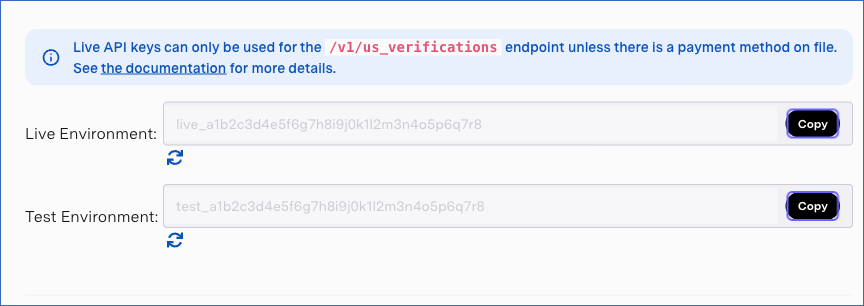
Hevo connects to your Lob account using a secret API key. Lob provides a secret API key for each of its two environments, live and test. Hevo replicates the data of the environment that the key belongs to. For example, if you provide the key of the test environment, Hevo replicates only the mail pieces and other records that you created in test mode.
Perform the following steps to obtain the secret API key:
-
Log in to your Lob Dashboard.
-
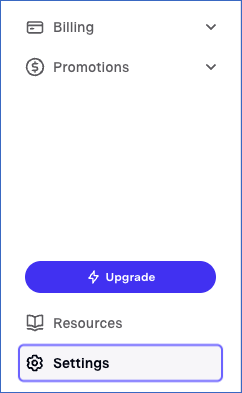
In the left navigation pane, click Settings.
-
On the Settings page, click the API Keys tab.

-
In the Secret API Keys section, click Copy next to the key of the environment from which you want to ingest data. Save the key securely like any other password.
Read API Keys for more information.
You can copy the secret API key from the API Keys tab at any time. If the key is regenerated in Lob, Hevo cannot connect to your account, and the Pipeline fails. To resume data ingestion, modify the Source configuration with the new key.
Configure Lob as a Source in your Pipeline
Perform the following steps to configure your Lob Source:
-
Click Pipelines in the Navigation Bar.
-
Click + Create Pipeline in the Pipelines List View.
-
On the Select Source Type page, select Lob.
-
On the Select Destination Type page, select the type of Destination you want to use.
-
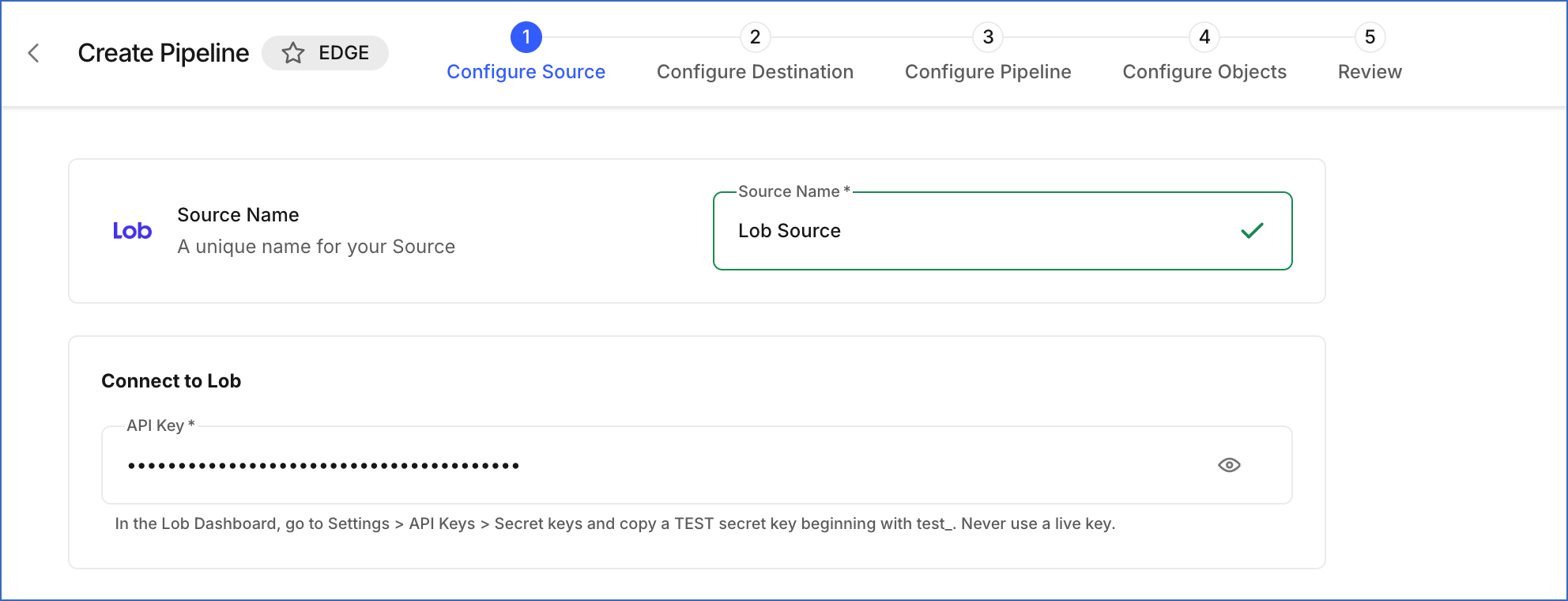
On the Configure Source page, specify the following:
-
Source Name: A unique name for your Source, not exceeding 255 characters. For example, Lob Source.
-
In the Connect to Lob section:
- API Key: The secret API key that you copied from your Lob Dashboard.
-
-
Click Test & Continue to test the connection to your Lob Source. Hevo checks that it can read the addresses of your Lob account with the key. Once the test is successful, you can proceed to set up your Destination.
Data Replication
Hevo replicates data for all the objects selected on the Configure Objects page during Pipeline creation. By default, all supported objects and their available fields are selected. However, you can modify this selection while creating or editing the Pipeline.
The first run of the Pipeline ingests all the data of the selected objects. In the subsequent runs, as per the sync frequency, Hevo ingests data as follows:
| Ingestion | Objects |
|---|---|
| New records, based on the time each record was created | Addresses, Bank Accounts, Checks, Letter, Postcard, Self Mailers, Template, and their child objects |
| All the records, in each run | Billing Groups, Campaigns, QR Code, and their child objects |
Lob does not provide the time at which a record was last updated in its list APIs. As a result, changes to existing records, such as the status of a letter or the description of a template, are not ingested in the regular runs. To capture these changes, Hevo reads all the records of the following objects at a fixed interval:
-
Letter: Once a day.
-
Bank Accounts, Checks, Postcard, Self Mailers, and Template: Once every seven days.
You can resync any object to ingest its latest data before the next scheduled read. Records of the Addresses object cannot be changed in Lob. Hevo does not read them again after they are ingested.
Note: You can create a Pipeline with this Source only using the Merge load mode. The Append mode is not supported for this Source.
Schema and Primary Keys
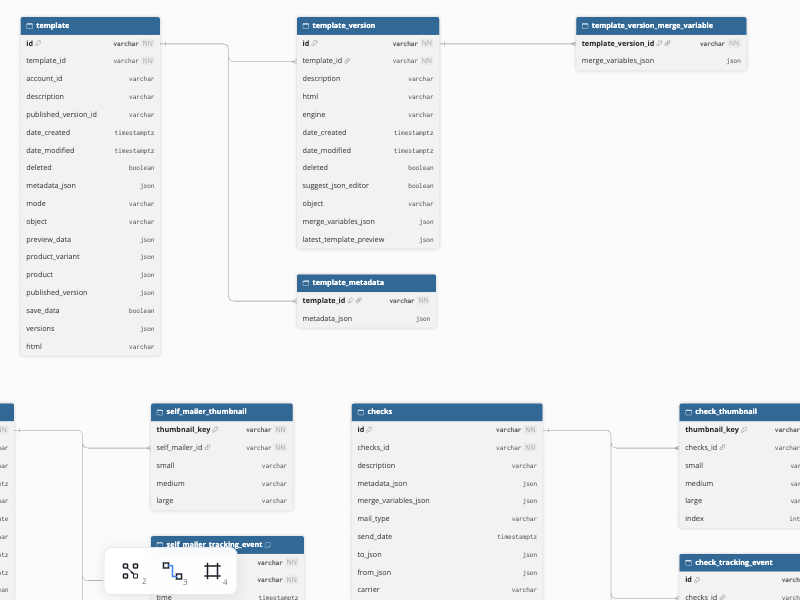
Hevo uses the following schema to upload the records in the Destination. For a detailed view of the objects, fields, and relationships, click the ERD.
Data Model
The following is the list of tables (objects) that are created at the Destination when you run the Pipeline:
| Object | Description |
|---|---|
| Addresses | Contains the addresses saved in your Lob address book, including the name, company, phone number, email address, and the postal address of each recipient or sender. It includes a child object, Address Metadata. |
| Bank Accounts | Contains the bank accounts from which you send checks, including the bank name, routing number, account number, account type, signatory, and whether each account is verified. It includes a child object, Bank Account Metadata. |
| Billing Groups | Contains the billing groups that you use to group your mail pieces for billing, including the name and description of each group. |
| Campaigns | Contains the direct mail campaigns of your account, including the name, schedule type, send date, billing group, use type, and whether each campaign is a draft. It includes the following child objects: - Campaign Creative, which includes the Campaign Creative Template Preview child object - Campaign Upload |
| Checks | Contains the checks that you send, including the amount, check number, memo, bank account, status, carrier, tracking number, expected delivery date, and the templates used for each check. It includes the following child objects: - Check From Address - Check Merge Variable - Check Metadata - Check Thumbnail - Check To Address - Check Tracking Event |
| Letter | Contains the letters that you send, including the status, mail type, send date, carrier, tracking number, expected delivery date, the print and envelope options, and the template and campaign of each letter. It includes the following child objects: - Letter From Address - Letter Merge Variable - Letter Metadata - Letter Thumbnail - Letter To Address - Letter Tracking Event |
| Postcard | Contains the postcards that you send, including the size, status, mail type, send date, carrier, expected delivery date, the front and back templates, the campaign, and the failure reason of each postcard. It includes the following child objects: - Postcard Failure Reason Error - Postcard From Address - Postcard Merge Variable - Postcard Metadata - Postcard Thumbnail - Postcard To Address - Postcard Tracking Event |
| QR Code | Contains the mail pieces that have a QR code, including the ID of each mail piece and the number of times its QR code was scanned. It includes a child object, QR Code Scan, which contains the date and location of each scan. |
| Self Mailers | Contains the self mailers that you send, including the size, status, mail type, send date, carrier, expected delivery date, the inside and outside templates, and the campaign of each self mailer. It includes the following child objects: - Self Mailer From Address - Self Mailer Merge Variable - Self Mailer Metadata - Self Mailer Thumbnail - Self Mailer To Address - Self Mailer Tracking Event |
| Template | Contains the HTML templates that you use to create mail pieces, including the description, the published version, and the HTML of each template. It includes the following child objects: - Template Metadata - Template Version, which includes the Template Version Merge Variable child object |
Additional Information
Read the detailed Hevo documentation for the following related topics:
Handling of Deletes
Hevo captures the deletes of the Lob objects as follows:
| Deletes Captured | Objects |
|---|---|
| In each run, by comparing the data |
Billing Groups, Campaigns, QR Code, and their child objects. Hevo ingests all the records of these objects in each run, and marks the records that are no longer returned by Lob as deleted by setting the value of the metadata column _hevo_marked_deleted to True. |
| When Hevo reads all the records of the object |
Bank Accounts, Checks, Letter, Postcard, Self Mailers, and Template. Lob does not return the records that you cancel or delete, such as a canceled letter or a deleted template. Hevo marks these records as deleted when it next reads all the records of the object, or when you resync the object. |
| Not captured | Addresses. An address that you delete in Lob remains in the Destination. |
Source Considerations
-
Lob accepts the secret API key of the live environment only for address verification requests until you add a payment method to your Lob account. Without a payment method, the connection test fails with the message Check the API key. To replicate the data of your live environment, add a payment method in Lob before you create the Pipeline.
-
Lob creates campaigns only in the live environment. If you provide the secret API key of the test environment, the Campaigns object and its child objects remain empty.
-
If the billing groups or self mailers features are not available for your Lob account, Lob denies access to these objects. In this case, Hevo loads no records for the Billing Groups or Self Mailers objects, and the Pipeline continues to replicate the other objects.
-
The file URLs and thumbnail URLs of the mail pieces, such as the url field of a letter, are signed links that expire 30 days after Hevo ingests them. To get valid links, resync the object.
-
If Lob limits the rate of API requests from Hevo, Hevo waits and retries the request.
Revision History
Refer to the following table for the list of key updates made to this page:
| Date | Release | Description of Change |
|---|---|---|
| Nov-24-2026 | 2.55 | New document. |